语桐: meaning and pronunciation
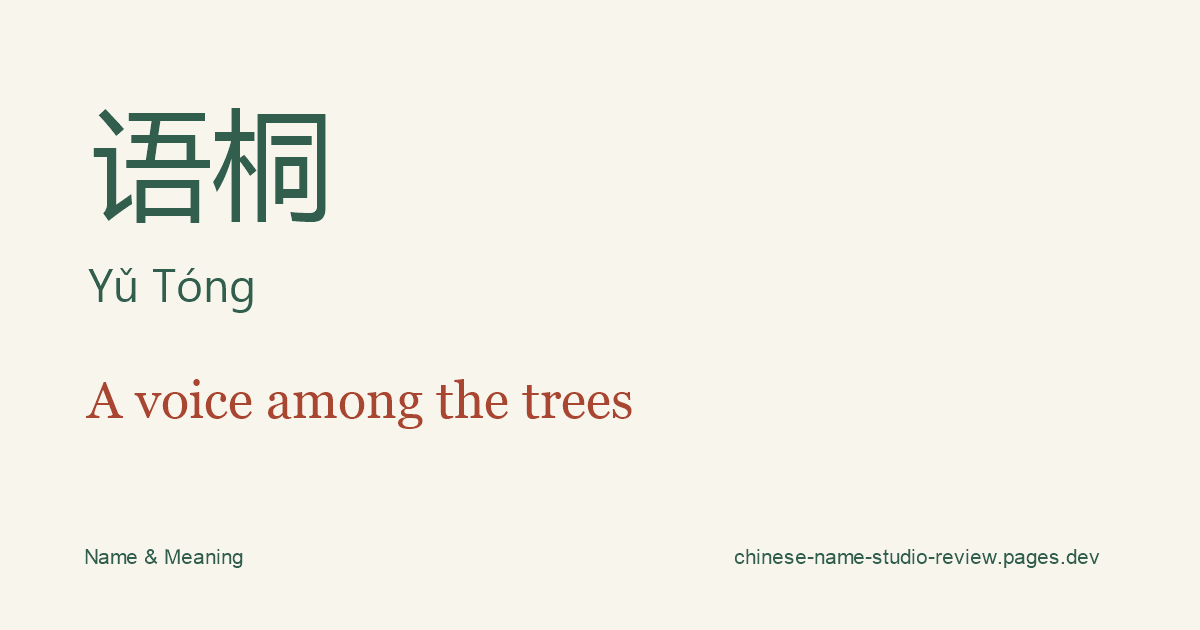
语桐
Yǔ Tóng · A voice among the trees
What each character means
语 (Yǔ) can mean language and speech. 桐 (Tóng) can mean the paulownia tree.
What the two characters suggest together
语 is language; 桐 is the paulownia tree, often found in Chinese names. Language and the paulownia tree create a literary nature image; it is not a phrase to translate word for word. We summarize this as “a voice among the trees.” That English phrase is an interpretation, not a literal translation or a guaranteed impression for every Chinese speaker.
How to say it
Read the two given-name syllables separately: Yǔ uses the 3rd tone (low then rising); Tóng uses the 2nd tone (rising). A frequent mistake for English readers is to ignore the tone marks or pronounce pinyin as if it were English spelling. Listen to the full name and ask a Mandarin speaker to check it.
Who might like this name?
This pair may appeal to someone drawn to curiosity and imagination and trees and growth. These are aesthetic associations, not a rule about age, gender or personality.
With a family name
Illustrative full-name combinations include 陈语桐 (Chén Yǔ Tóng), 何语桐 (Hé Yǔ Tóng), 叶语桐 (Yè Yǔ Tóng). The family name changes the rhythm and may create different sound associations. These examples have not been certified for every dialect or slang meaning.
Compare 映月 and 嘉宁, or return to all 24 name ideas.